Skip to content
Division of Health AIDivision of Health AI
AboutTeamResearchPublicationsJoin
Theme
Division of Health AIDivision of Health AI

Clinical AI built with the data and clinicians of Northwell Health.

Explore

  • About
  • Team
  • Research
  • Publications
  • Join

Affiliations

  • Feinstein Institutes (opens in new tab)
  • Northwell Health (opens in new tab)
  • Zucker School of MedicineHofstra Northwell

Located at

  • Institute of Health System Science
  • Institute of Bioelectronic Medicine
  • Manhasset, New York

© 2026 Division of Health AI, Northwell Health. All rights reserved.

All research

NIH-funded · Active since 2020

REVA: the human vagus nerve atlas

A comprehensive anatomical dataset of 60 human vagus nerves (30 left, 30 right), spanning millions of micro-CT images across hundreds of terabytes of data. Using 3D nnU-Net segmentation, this project builds a detailed vagus digital twin to guide the design of selective vagus nerve stimulation therapies, part of a $6.7 million NIH SPARC award in collaboration with the TNP Lab.
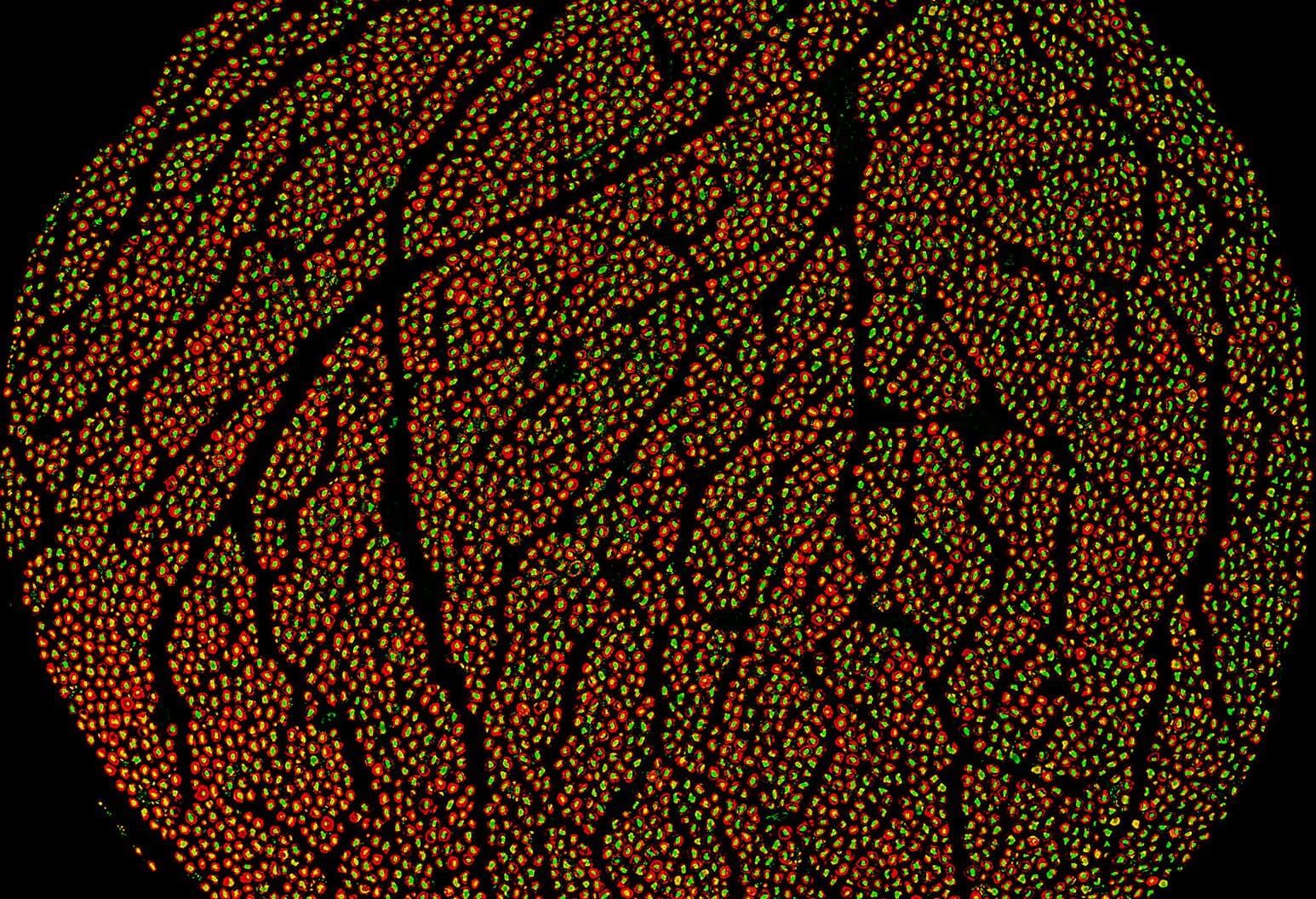
Cross-section of a human vagus nerve from the REVA dataset, with individual fibers mapped across the fascicles.
Cross-section of a human vagus nerve from the REVA dataset, with individual fibers mapped across the fascicles.Feinstein Institutes release, July 2026 · Photo: Northwell Health (opens in new tab)

Overview

The vagus nerve carries the signals that bioelectronic medicine aims to read and write, and until REVA no complete map of its fibers existed. Reconstructing Vagal Anatomy (REVA) imaged 60 human vagus nerves, 30 left and 30 right, with micro-CT at fiber resolution, producing millions of images and hundreds of terabytes of data, and segmented them with 3D nnU-Net into a digital twin of the nerve from the neck to the abdomen.

The maps were released publicly through the SPARC data portal in July 2026. They show how organ-specific fascicles, such as the bronchopulmonary and recurrent laryngeal fibers, are organized along the nerve, which is the anatomical basis for stimulation that reaches one organ and spares another.

REVA is a $6.7M NIH SPARC award to the Feinstein Institutes for Medical Research, with the division responsible for the segmentation and analysis pipeline, in collaboration with the TNP Lab.

Status
Active since 2020
Program
NIH-funded
Funding
NIH Common Fund, Stimulating Peripheral Activity to Relieve Conditions (SPARC)
Publications
2, latest 2023
Team
3 members

Awards

  • Reconstructing Vagal Anatomy (REVA): a comprehensive anatomical map of the human vagus nerve

    NIH Common Fund, Stimulating Peripheral Activity to Relieve Conditions (SPARC) · $6.7M · Multi-year award

    Feinstein Institutes for Medical Research

    NIH SPARC program (opens in new tab)

Publications

Papers

View in the index
Brain StimulationFeb 2023

Organ- and function-specific anatomical organization of vagal fibers supports fascicular vagus nerve stimulation

(opens in new tab)
Annual International Conference of the IEEE Engineering in Medicine and Biology Society (EMBC)Jul 2020

Single-axon level automatic segmentation and feature extraction from immunohistochemical images of peripheral nerves

(opens in new tab)

People

On this project

Theodoros Zanos, PhD

Professor & AVP

Todd Levy, MS

Senior Biomedical Engineer

SK

Sarah Khan

Visiting Scholar

More NIH-funded programs

NIH-funded · R01NR020774

In-hospital deterioration prediction

Deep learning models that estimate a hospitalized patient's risk of deterioration continuously, from the electronic health record and from wearable sensors, so that clinicians are warned hours before a rapid response or ICU transfer.

ONSET

NIH-funded · R01AG100193

Delirium identification and prediction

Machine learning that identifies delirium in hospitalized older adults from clinical notes, using large language models, and predicts who is at risk before it develops.

NIH-funded · U01OH012050

Transcutaneous auricular vagus nerve stimulation for PTSD in World Trade Center responders

A feasibility and acceptability study of daily, non-invasive auricular vagus nerve stimulation to reduce PTSD symptoms among 9/11 responders, twenty years after the attacks.

←Previous

Delirium identification and prediction

Next→

Transcutaneous auricular vagus nerve stimulation for PTSD in World Trade Center responders