

Journal of General Internal Medicine
Federally funded · Active
FDA-funded validation of electrocardiogram devices and independent evaluation of clinical AI on Northwell's own patients, before and after a tool reaches the bedside.
Overview
Clinical AI is reaching the bedside faster than the evidence needed to trust it. Health systems are offered early-warning models, diagnostic aids, and documentation tools whose performance is reported by their developers and seldom tested independently in the populations where they will be used. The program evaluates these tools on Northwell's own data across the life of a model: retrospective validation before deployment, with calibration, subgroup, and fairness analysis against the current standard of care; prospective evaluation of the effect on patient outcomes and clinician workload; and monitoring for performance drift once a tool is in use.
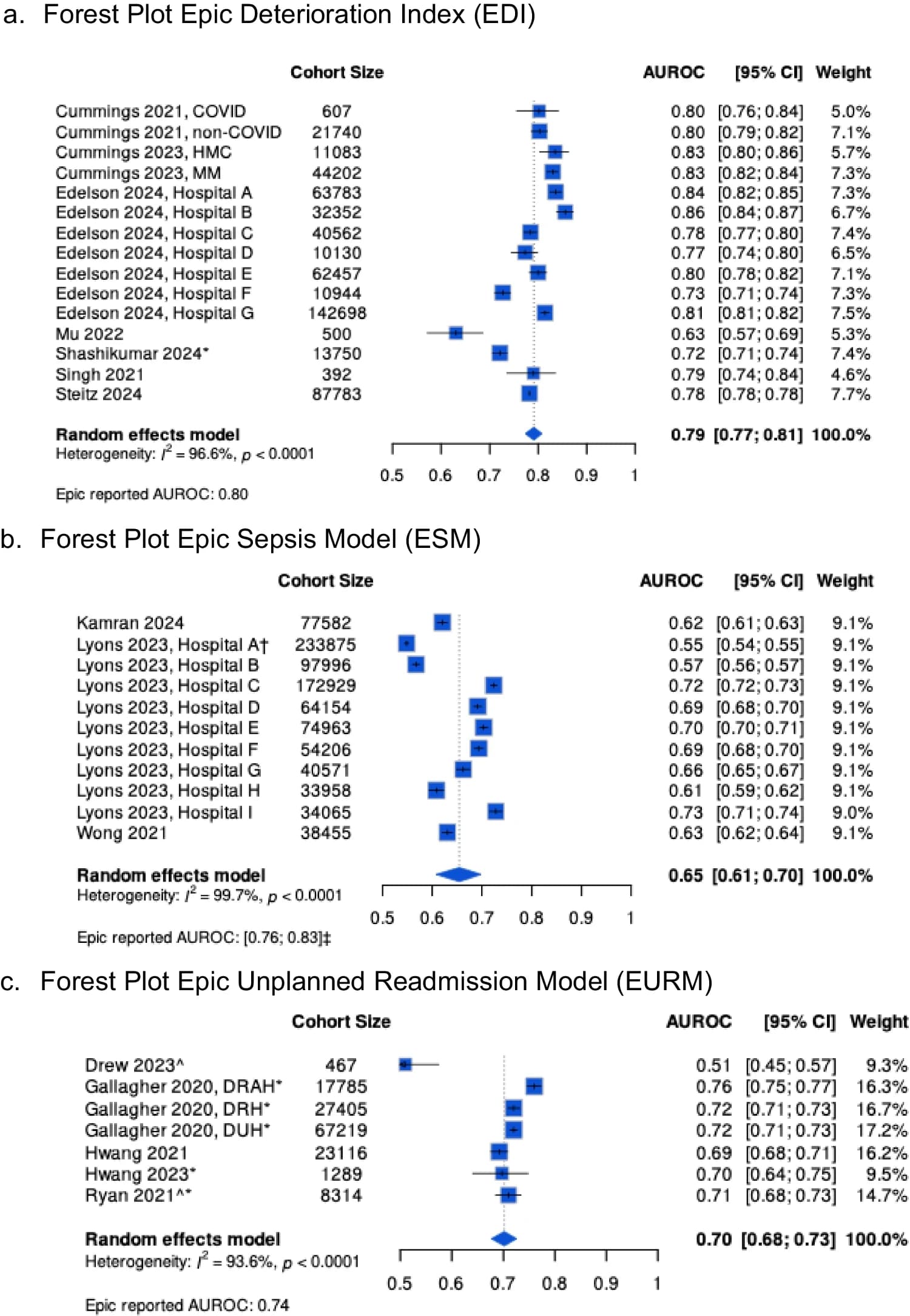
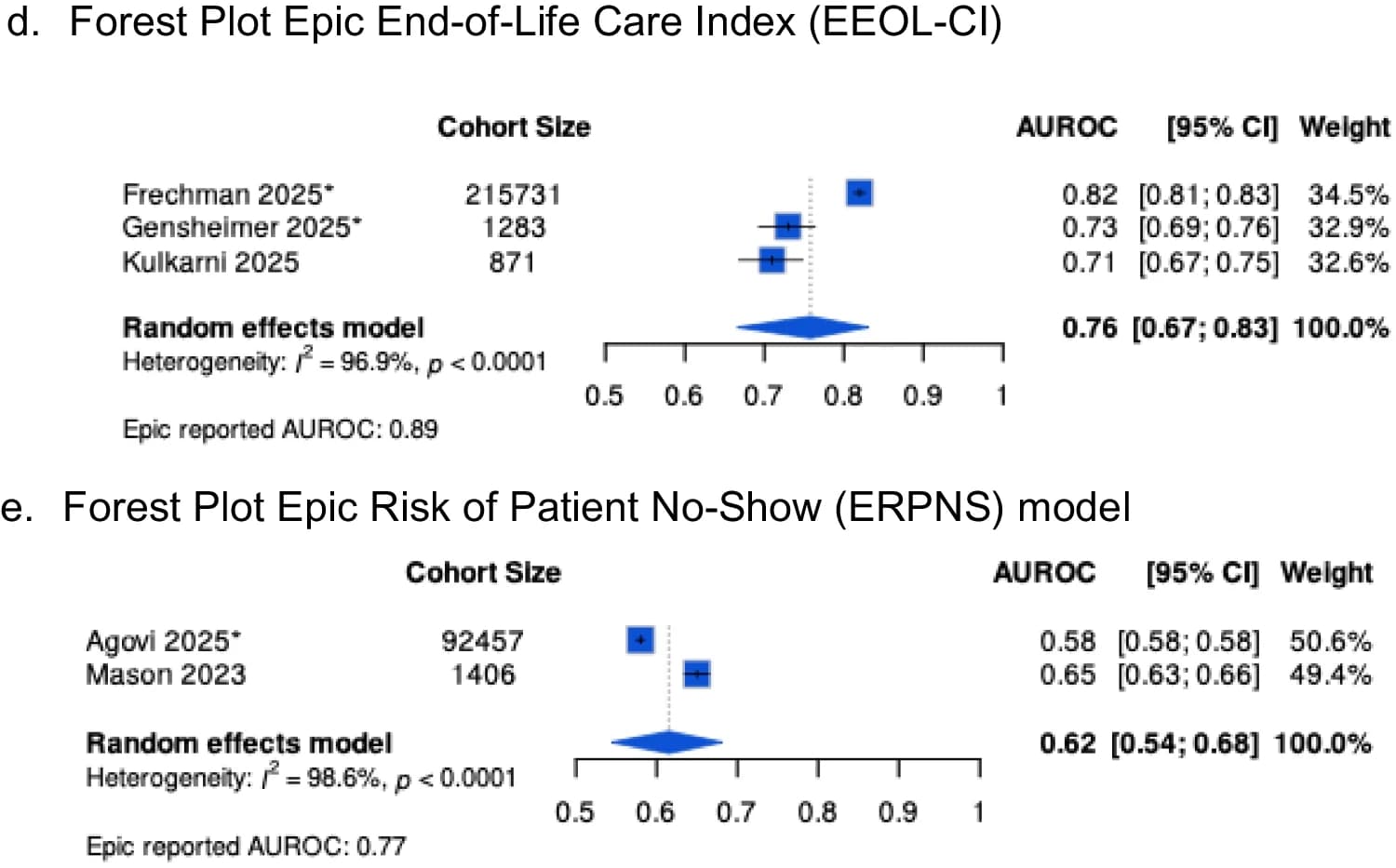
The case for local validation runs through the division's own record. In 2020 the division tested an interpretable COVID-19 mortality model on Northwell patients and reported in Nature Machine Intelligence that it did not transfer: more than half of the patients it predicted would die survived. In 2026 a systematic review and meta-analysis in the Journal of General Internal Medicine pooled 22 external validations of Epic's clinical decision support tools, covering more than 2.3 million patients at 34 sites. No model exceeded a pooled AUROC of 0.79, and three performed below the ranges Epic reports.
The work now extends to regulated devices. Under ECG-STARS, a contract funded by the U.S. Food and Drug Administration, the division is validating electrocardiogram devices.
- Status
- Active
- Program
- Federally funded
- Publications
- 2, latest 2026
- Team
- 3 members
On this project
From the papers
Published figures
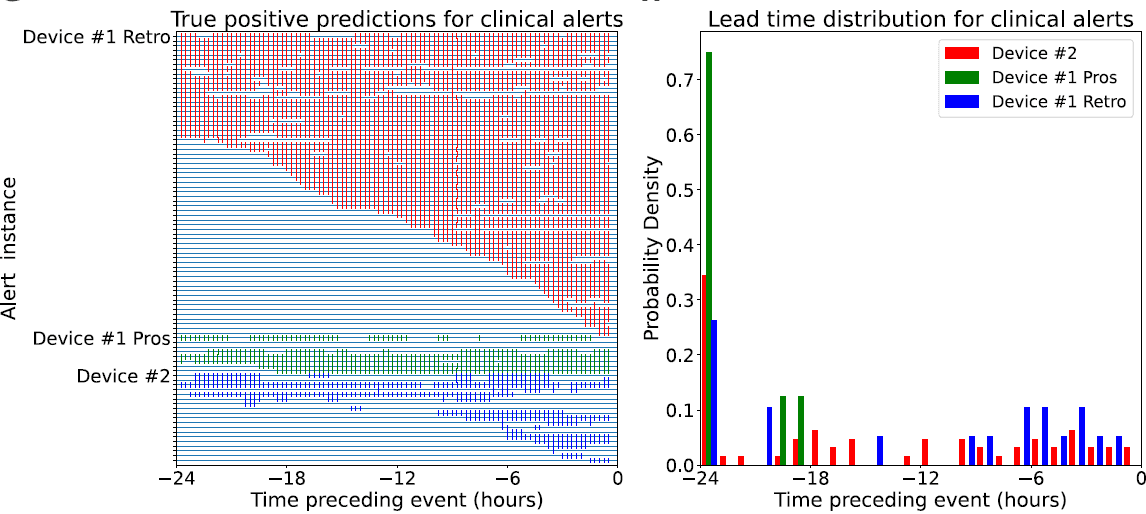
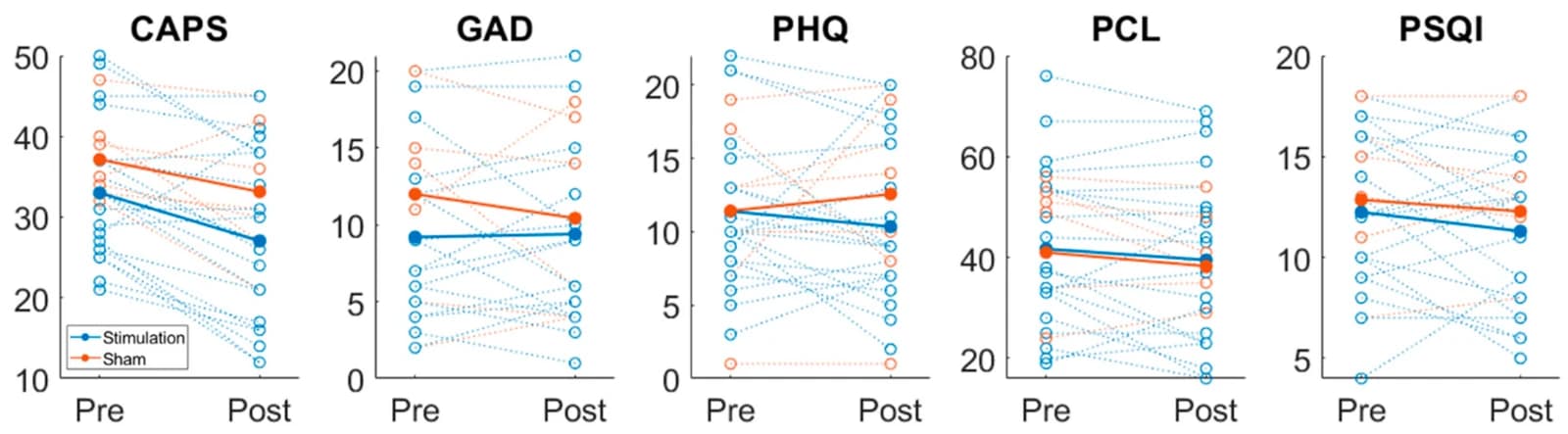
Figures reproduced from the papers behind this project. Each panel keeps its original source and license.
Publications
Recent