Skip to content
Division of Health AIDivision of Health AI
AboutTeamResearchPublicationsInternship
Division of Health AIDivision of Health AI

Clinical AI built with the data and clinicians of one of the largest health systems in the United States.

Explore

  • About
  • Team
  • Research
  • Publications
  • Internship

Affiliations

  • Feinstein Institutes↗ (opens in new tab)
  • Northwell Health↗ (opens in new tab)
  • Zucker School of MedicineHofstra Northwell

Located at

  • Institute of Health System Science
  • Institute of Bioelectronic Medicine
  • Manhasset, New York

© 2026 Division of Health AI, Northwell Health. All rights reserved.

← Back to Team

Researcher · Division of Health AI

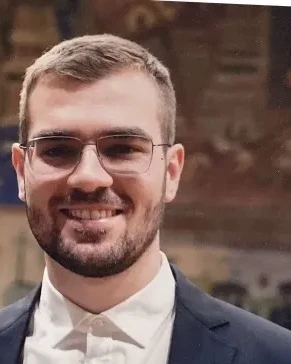
Michael Scheid, PhD

Michael Scheid is an Assistant Investigator and Senior Biomedical Engineer at the Feinstein Institutes for Medical Research, and lead author of the division's work on predicting in-hospital patient deterioration from continuous wearable biosensor data. His research, published in Nature Communications (2025), demonstrates a deep learning approach that predicts clinical deterioration up to 17 hours in advance, achieving 81.8% accuracy in identifying unplanned ICU transfers and critical outcomes. He holds an NIH Research Specialist Award (R50) from the National Library of Medicine to scale clinical wearable foundation models for the detection of in-hospital deterioration. His additional work includes clinical alert systems for early detection of decline and analysis of ICD remote transmissions for atrial fibrillation prediction.

2 projects·2 papers

Michael Scheid, PhD
Role
Assistant Investigator, Senior Biomedical Engineer
LinkedIn
LinkedIn (opens in new tab)
Google Scholar
Profile (opens in new tab)

Research projects

Research projects

WEARABLEEVENT17 H

In-hospital deterioration: wearable monitoring

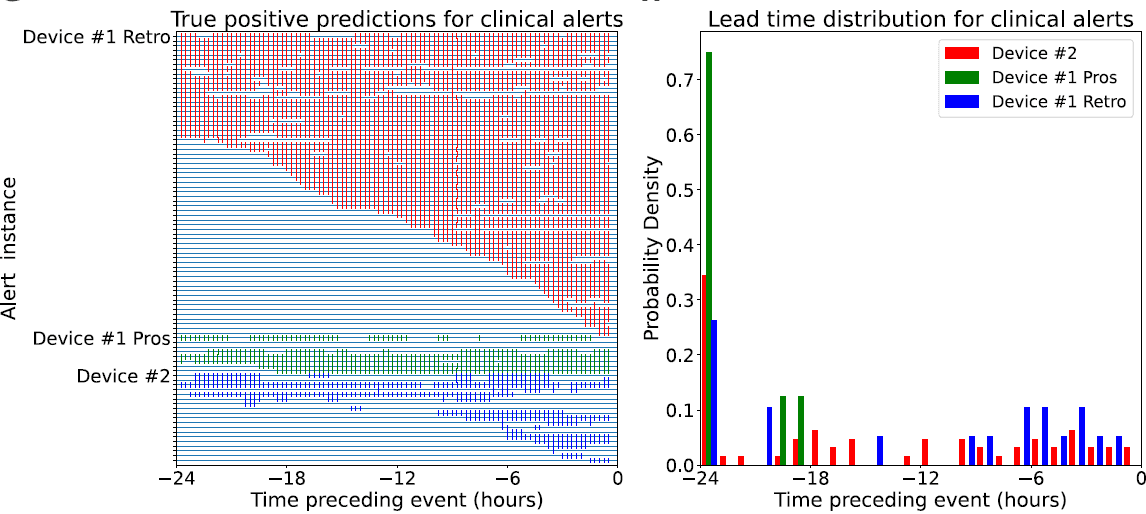
A wearable-based deep learning model using just 9 physiological inputs predicts clinical deterioration up to 17 hours before onset, enabling earlier intervention. Funded by a 4-year, $3.1M NIH grant, the model generalizes across a range of adverse outcomes, including rapid response calls, unplanned ICU transfers, intubations, and in-hospital deaths, and demonstrated 81.8% accuracy across 888 inpatient visits.

Point-of-care AI

Archive · 1

  • Cardiology, arrhythmia and CPR→

Publications

Selected papers

Nature CommunicationsNov 2025

Beyond episodic early warning systems: a continuous clinical alert system for early detection of in-hospital deterioration

(opens in new tab)
Journal of Cardiovascular ElectrophysiologySep 2025

Leveraging Implantable Cardiac Defibrillator Remote Transmissions to Predict the Occurrence of Atrial Fibrillation

(opens in new tab)

Related

More of the division

Full roster →
LC

Lucas Cang

Visiting Scholar

Nabil Ettehadi, PhD

AI/ML Advisor

Alejandro Quintero Villegas, MD

Elmezzi Scholar