Point-of-care AI · Closed
All researchOvernight patient-stability monitoring
Past project
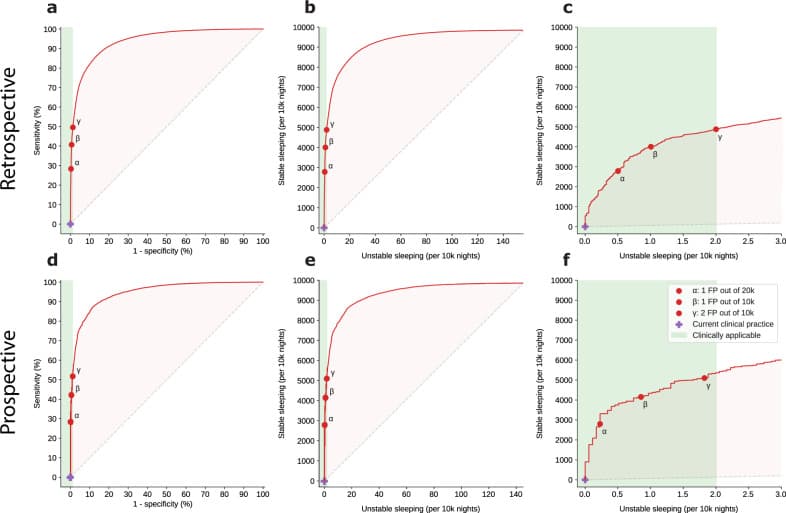
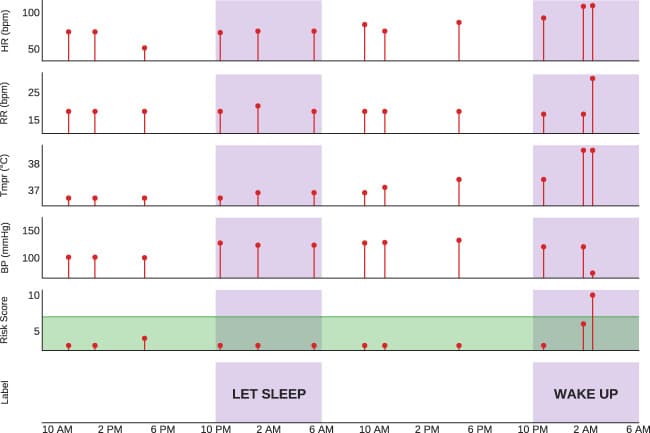
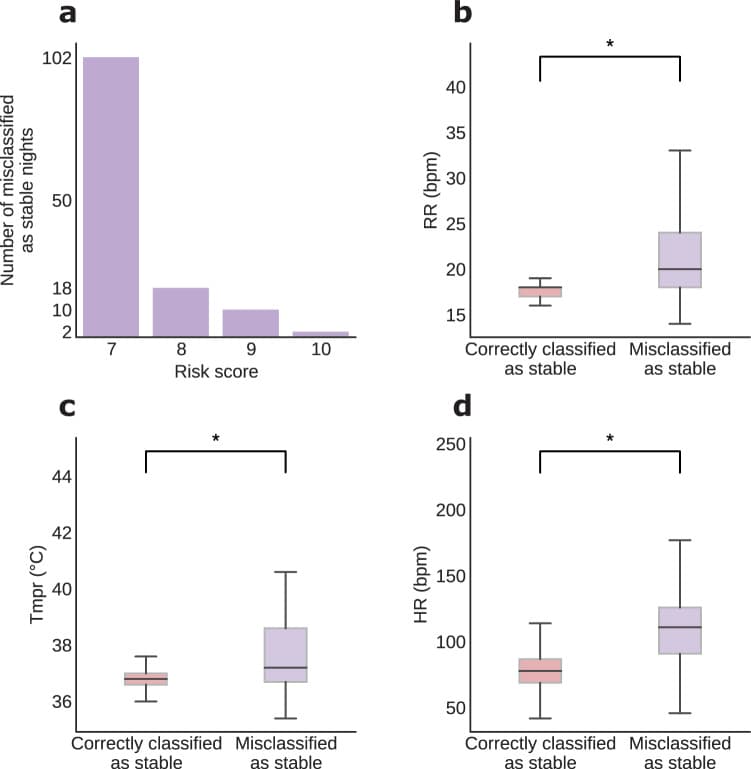
A deep learning model that predicts overnight patient stability from vital sign sequences, enabling the safe avoidance of unnecessary monitoring for 50% of patient-nights while misclassifying only 2 per 10,000 cases. Trained on 2.3 million admissions, it reached a prospective AUC of 0.971.
1 researcher1 publication3 figures
Point-of-care AIDivision of Health AI
From the papers
Published figures
Figures reproduced from the open-access papers behind this project.
Each panel keeps its original source and license. Scroll the column at left to move through the published results while these notes stay in view.
People · 1
On this project

Publications · 1
Related papers
Related
More in Point-of-care AI
Generative AI for Minimal-Lead ECG Reconstruction
This project develops generative deep learning models to reconstruct multi-lead ECG signals from minimal input leads, assessing whether a small number of key ECG recordings can capture sufficient signal and diagnostic information for robust clinical interpretation and scalable cardiac monitoring.
Point-of-care AI
AI-Enabled ECG Risk Stratification for Acute Coronary Syndrome
Machine learning models identify high-risk acute coronary syndrome patients using admission ECG features and vital signs to predict in-hospital mortality and clinical deterioration, with interpretable outputs that guide triage and escalation decisions in acute cardiovascular care.
Point-of-care AI
Delirium classification
Developing a machine learning framework to automatically identify delirium from clinical chart text using large language models, and building a predictive model to detect delirium onset early using clinical and physiological biomarkers.
Point-of-care AI